#Maintenance of Construction Equipment – What Contractors Should Pay Attention To
Maintenance of Construction Equipment – What Contractors Should Pay Attention To
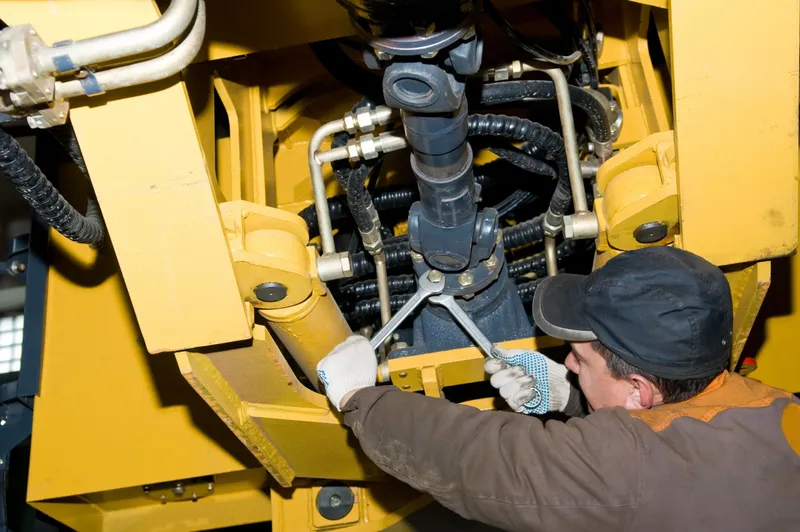
Construction equipment that breaks down on the job site costs time and money. We explain what maintenance means and what details every contractor should pay attention to.
Maintenance – Definition
Maintenance includes all technical and administrative measures performed on construction equipment to preserve the machine's operational condition. Crucially, maintenance of construction equipment takes place during the holding period – while the machines are in use on a job site. Repair, on the other hand, covers repairs outside the holding period to prepare machines as well as possible for their next deployment.
Also worth reading: Defect in rented cranes: How to handle it correctly
Defect in cranes: The key information
Standards DIN EN 13306 and DIN 31051 – What do I need to know?
There are numerous regulations for maintenance that cover not only specific technical measures, but also topics like preparation, logistics, and documentation of these measures. Two standards are particularly important: DIN EN 13306 and DIN 31051.
To ensure consistency, the standard EN 13306 was established at the European level and exists in Germany as DIN EN 13306. This standard explains the meaning of all important terms that play a role in the maintenance process – from failures and faults to maintenance strategies and maintenance phases. The original standard DIN 31052 now only supplements terms that are not yet covered in DIN EN 13306. The purpose of these standards is to prevent misunderstandings: The definitions ensure that all parties involved know what is being discussed. The European standard (DIN EN 13306) has the additional advantage of being available in three languages – German, English, and French – making it suitable for use in construction projects with international business partners.
Preventive Maintenance and Maintenance Costs – What Strategies Are There?
When establishing a maintenance strategy for your equipment fleet, there are several factors to consider: How high is the failure risk for individual machines? What maintenance processes must be performed in case of a breakdown? Where can spare parts be sourced and stored? Which employees have the appropriate training to perform maintenance work?
One possible strategy is planned preventive maintenance (PPM): Machines are inspected and serviced regularly, before any defect becomes apparent. Minor damage identified during inspection is repaired, and certain failure-prone components are routinely replaced regardless of their actual wear condition. Such preventive maintenance is generally more cost-effective than having to stop construction work due to equipment failure. Repair costs for construction equipment incurred as part of maintenance are typically included in holding costs.
Explore our entire rental glossary
This page was automatically translated from German.