The Construction Industry and CO2 Consumption
"The construction industry is one of the most resource-intensive economic sectors. In Germany alone, 517 million tons of mineral raw materials are built into structures annually. This corresponds to 90 percent of total domestic extraction." (Source ). The consumption of global resources is substantial. Material efficiency is just one of many aspects that should receive attention. There are many more factors to consider: the global transport and deployment of construction machinery as well as diesel fuel emissions cause significant damage: – 40% of CO2 emissions and nearly one-third of all waste in the EU are generated by the construction industry (Source ).
"We must act now. As a company, we are aware of our responsibility to contribute to Europe becoming climate-neutral by 2050. klarx transports machinery across millions of kilometers throughout Europe every year and thus has a direct impact on climate goals", says Florian Handschuh, co-founder of klarx. Which steps klarx is already taking and which solution approaches everyone can implement immediately are explained below.
3 Solution Approaches for Greater Sustainability in the Construction Industry
1. Establish a Team of Climate Officers
Becoming more sustainable is not something you do on the side. Regardless of how large or small a company is, you should consciously and actively engage with the topic of "climate neutrality in the company". This works best if you evaluate a team of people who are also personally enthusiastic about the topic and want to drive things forward. Main tasks include calculating, reducing, and offsetting your own company's CO2 emissions. At this point, any employee of a company can easily get started. Climate officers actively engage with the topic, find solution approaches, and exchange ideas with management. The primary goal is to create awareness, break down old structures, and counteract climate change.
2. Evaluate and Apply Circular Business Models for Construction Phases
The value chain of the construction industry is diverse and thus offers many opportunities to focus on ecological footprint.
Save resources, reuse construction debris & co. and reprocess materials – the circular economy system can be applied in almost every construction phase. It's enough to just get started: use digital tools instead of paper during planning, switch to renewable building materials during procurement, or avoid waste during the construction process itself through recycling of surplus material. Renewable raw materials have the advantage that they can be used multiple times, bind atmospheric carbon, and are biologically recyclable (Source ).
3. Rent Construction Machinery for Construction Projects Instead of Buying
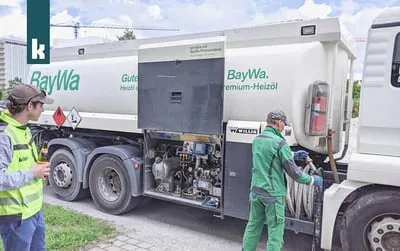
Should the procurement of construction machinery be reliable, flexible, and yet sustainable? As a digital solution provider for the rental of construction machinery, we guarantee not only the availability of all agreed machines, but also pay attention to people, climate, and environment in our own logistics. Short transport routes, climate-neutral diesel fuel, and digital handover protocols are the first steps in the right direction. By having all project participants use our digital tools such as klarxMANAGER or klarxSUPPLY, not only is much time saved before, during, and after the rental, but unnecessary paper is also avoided. Renting construction machinery through klarx has a positive effect on the environment by optimizing the degree of utilization, preventing non-use, and reducing material consumption as much as possible.
It goes without saying that the construction industry cannot become environmentally conscious overnight – but with the points mentioned above, the path can be paved: Creating awareness for more sustainability in the construction industry is already half the battle.


